

I left BevNET Live thinking less about what's in the can and more about where the can sits.
Walk into most grocery stores and the non-alcoholic seltzers and "adult sodas" sit right next to the beer. Retailers place them there because a zero-proof seltzer looks like a beer substitute. The logic is tidy.
The catch is that placement teaches shoppers how to read a product. Put a drink next to beer and you tell the shopper it's a replacement for beer. That framing only works if the shopper agrees. Our data says most don't, and that gap may be quietly costing the category.
The category keeps positioning itself to win a contest most shoppers aren't entering.
The positioning problem starts on the shelf
When Brightfield asked people drinking less alcohol what they actually swap in, coffee and tea topped the list at 34.3%, followed by soda (27.7%) and sparkling water (17.4%). A striking 21.0% replace alcohol with nothing at all. That last figure matters. The category's primary competition isn't beer. For a meaningful share of shoppers, it's abstinence.
Among functional beverage buyers and interested shoppers, the pattern repeats. The drinks they most want to replace are soda (25.3%), coffee (23.7%), and herbal tea (22.8%).
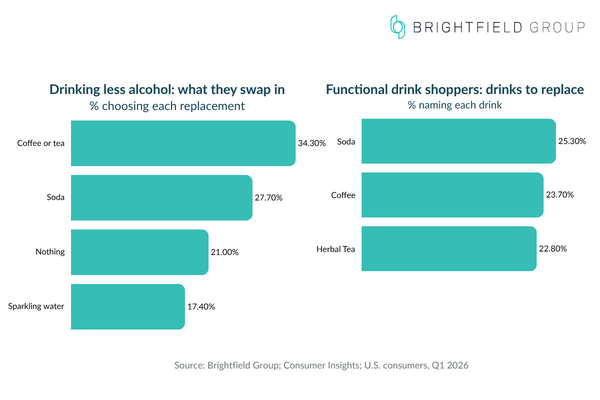
Two separate questions, one consistent answer. The everyday drink is the mental reference point, not the cocktail. When a brand leads only with an alcohol-substitute message, are there enough consumers who are looking for that answer?
The shelf isn't just a location. It's a label. Whatever sits beside a product tells the shopper what that product is for.
The occasion data makes the gap concrete
To try and parse out the opportunity, we looked closer at the functional beverage consumer insights. People reach for functional drinks most often while relaxing at home (47.0%), followed by a daytime boost (35.5%) and the start of the day (33.7%).
The classic alcohol settings barely registered. Only 10.1% use these drinks at a bar or restaurant, and 11.7% at a party.
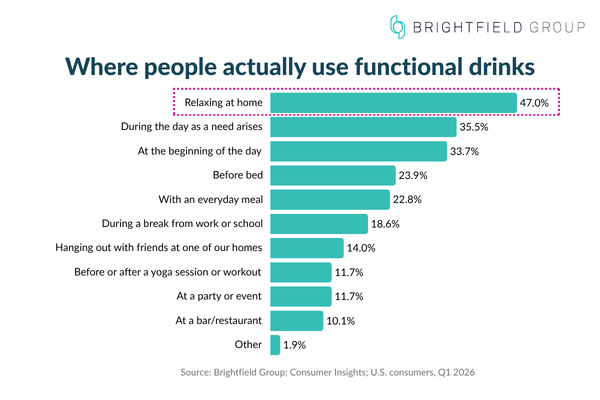
The dominant use case is quiet and domestic. A product built and shelved as a night-out replacement is aiming at the smallest slice of its own real demand.
Where alcohol replacement fits, and where it doesn't
None of this means the alcohol-substitute angle is wrong. It means it's one occasion, not the whole category.
About 16% of functional beverage buyers and interested shoppers want these drinks to replace beer, and a similar 16% want them to replace wine, spirits, or alcohol in general. That's a real, sizable segment. It just isn't the majority, and positioning the full category around it leaves most demand unaddressed.
The more interesting opening is the overlap between alcohol's appeal and functional drinks' usage. Relaxation is a leading reason people drink alcohol, and it's the top occasion for functional drinks too. Yet relaxation is undersupplied. Around 31% of buyers and interested shoppers want a relaxation or stress benefit, while only 22% of buyers report getting one. (These figures come from related but distinct survey groups, so treat the gap as directional, not a precise delta.)
A brand that credibly owns "unwind at home, no drink required" isn't competing for the beer shelf. It's meeting a need that already exists, in the moment where it peaks.
The biggest opening isn't stealing a beer occasion. It's owning a moment alcohol never fully satisfied: the at-home unwind.

Effect matters. Taste decides.
This was the debate that wouldn't die at BevNET Live. How much does a felt, immediate effect really matter?
If a shopper is replacing the unwind ritual of a drink, a slow-build ingredient like ashwagandha or lion's mane may not deliver a felt payoff in the moment. Fast-acting ingredients like cannabis, kava, and kanna are more likely to close that loop. The numbers back the concern. About 29% of buyers say they're less likely to repurchase if a functional drink doesn't feel like it does anything.
But effect isn't the biggest barrier to trial. Flavor is. It's the top purchase driver by a wide margin (64.9%), and an off-taste is the second most common reason people walk away (43.8%).
The practical read: invest in effect to drive retention, but don't let it crowd out the flavor work that drives trial. Shoppers who don't like the taste won't stay long enough to notice the effect.
What the data says to do now
Three decisions are worth revisiting.
-
Lead with function over occasion. Framing around calm, focus, or recovery matches how people actually use these products, and it doesn't depend on the shopper agreeing they wanted a drink substitute.
-
Rethink shelf placement. Coffee, tea, and sparkling water are the real competitive set for most buyers. Sitting near those categories signals everyday relevance instead of occasion replacement.
-
Earn the relaxation occasion. The gap between people seeking relaxation and people finding it is where the category has the most room to win. Brands that can prove the benefit, not just claim it, hold a position alcohol can't easily take back.
The Questions BevNET Live Left Open
The data points to clear moves, but it doesn't settle everything. A few questions are still worth arguing about, and they're the ones I keep circling back to since the event.
-
Does leading with function cost a brand the visibility of the alcohol set, where foot traffic and impulse buys run high? Trading shelf adjacency for relevance is a real bet, not a free one.
-
How fast does fast need to be? The right speed of effect may differ by occasion, by ingredient, and by what the shopper is replacing.
-
And how much of this is a retailer decision, not a brand one? Placement sits with the retailer as much as the marketer, and the category may not move until both sides agree on where these drinks belong.
We don't have the last word on these yet. Neither does anyone else. That's part of why they're worth working through together.
The Takeaway
The data is consistent. Most people in this category aren't shopping for the opposite of alcohol. They're shopping for a better version of the drinks they already reach for, with a benefit attached.
That's a different brief, but a larger market.
Want to pressure-test your positioning against real consumer behavior?
Talk to Brightfield Group about how our consumer insights and social listening data can sharpen your next move.

Updated: 06/24/2026