The hemp-derived THC industry is facing a major inflection point.
Recently passed federal budget legislation includes provisions that would severely restrict the sale of hemp-derived THC products, including a near ban on virtually all intoxicating hemp goods. While there is certain to be a regulatory fight to defend the industry before regulations take effect in November 2026, the message is clear. The era of unregulated hemp-derived THC is coming to a close.
The moment calls for a clear look at what the industry needs next—and how to build toward it.
A Pivotal Moment for a Maturing Industry

Over the last several years, hemp-derived THC has reshaped how adults approach intoxication and relaxation, with beverages in particular driving the industry toward the mainstream. With sales of drinks estimated at $1.1 billion in 2025, the category has captured the attention of consumers, retailers, and distributors alike, including in adjacent industries such as alcohol and functional beverages.
Now, federal scrutiny is accelerating what was already inevitable. A move toward clearer boundaries, higher standards, and a more professionalized market.
The proposed restrictions have understandably shaken the industry, and the adjustments ahead will be difficult. As legislations and lobbyists work to determine whether a viable regulatory path remains, businesses must prepare for a more tightly regulated industry and explore potential moves into adjacent categories.
The Category’s Brightest Path: Beverages
Amid tightening regulations, beverages remain the most promising format for hemp-derived THC to thrive in a compliant future.
Why?
- Distribution-ready: Beverages neatly fit within existing alcohol distribution networks.
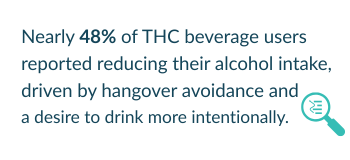
- Demand Reflected in Behavior: In Brightfield Group’s Q3 2025 survey, nearly 48% of THC beverage users reported reducing their alcohol intake, driven by hangover avoidance and a desire to drink more intentionally.
- Retailer-friendly: Dosing is more consistent, packaging is controlled, and compliance is easier to monitor compared to vapes, flower, or other edibles.
If a regulatory pathway forward is found and a ban is averted, drinks could grow in significance, becoming the face of a streamlined, federally recognized category.
Strategic Moves for Brands Now
With federal restrictions now looming, hemp-derived THC businesses face a narrow window to assess their exposure and prepare for a more constrained regulatory environment.
Potential actions include:
1. Plan for Multiple Regulatory Scenarios
While a full shutdown is possible, with lobbying pressure, Congress may revise dosage limits or allow limited ingestible pathways before legislation takes effect. Operators should build scenarios for both outcomes so they can pivot quickly if a more workable framework emerges.
2. Preserve Optionality Through Controlled Diversification
Begin identifying adjacent or complementary categories—functional beverages, wellness formulations, or partnerships within regulated cannabis—that could absorb part of the business if hemp-derived THC is restricted.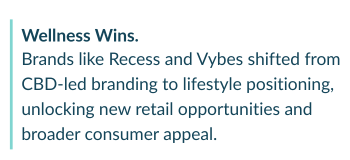
3. Reframe Brand Value Beyond Cannabinoids
Anchoring brands in consumer benefits rather than THC content creates more flexibility if operators need to pivot into compliant or adjacent categories.
4. Strengthen Compliance and Advocacy Efforts
If any path remains open, it will likely rely on strong testing, labeling, and dosage control. Demonstrating readiness for a regulated environment can support both policymaker engagement and retailer confidence.

Why This Market Isn’t Done Yet
Yes, the proposed restrictions are daunting. But the consumer demand they seek to regulate isn’t going away.
Consumers still want:
✔️ Alternatives to alcohol that feel social but not intoxicating
✔️ Functional ingredients that support mood, stress relief, and relaxation
✔️ Products they can trust and understand
If (and it’s a big if) policymakers and the industry can meet in the middle, offering responsible access, consistent dosing, and clear rules, there’s still room to grow a robust, federally compliant market.
In fact, a legitimized market could unlock even more opportunity.
With the right guardrails, THC beverages could expand deeper into liquor stores, wellness aisles, and even grocery channels. If they capture just 5% of U.S. alcohol sales, that’s a potential $20 billion category.
What Comes Next: From Uncertainty to Opportunity
The next 12 months are critical. Decisions made now by regulators will shape whether hemp-derived THC will be entering a new, potentially exciting era of federal regulation or be legislated out of existence.
This is the time for:
- Coalition-building and advocacy to influence final regulations
- Exploring potential opportunity in adjacent markets, preserving existing consumers
- Brand storytelling that centers on function, not just cannabinoids
The path forward won’t be easy, but it’s not yet closed. The hemp-derived THC industry has birthed strong brands that can work to adapt, advocate, and preserve what value they’ve created as the regulatory landscape comes into focus.
Final Thought
The hemp-derived THC industry is at a turning point. What began as an open, fast-moving category is now facing its toughest regulatory test. The coming year will determine whether hemp-derived THC evolves into a smaller, more structured market with more restrictions but potentially explosive growth potential, or if it will wither on the vine.
The opportunity lies in how brands respond. Those that plan strategically, coordinate efforts, and stay aligned with consumer needs will be best positioned to shape what comes next.
This isn’t just about survival. It’s about leading the transition to a smarter, stronger market. One that earns its place on shelves, in retail partnerships, and in the wellness routines of millions of Americans.

Updated: 12/02/2025